Free Shipping on $50+, Free Returns on All Orders.





Yes. It is a long-term investment in sleep quality, spinal health, and overall well-being, often reducing medical and posture-related issues.
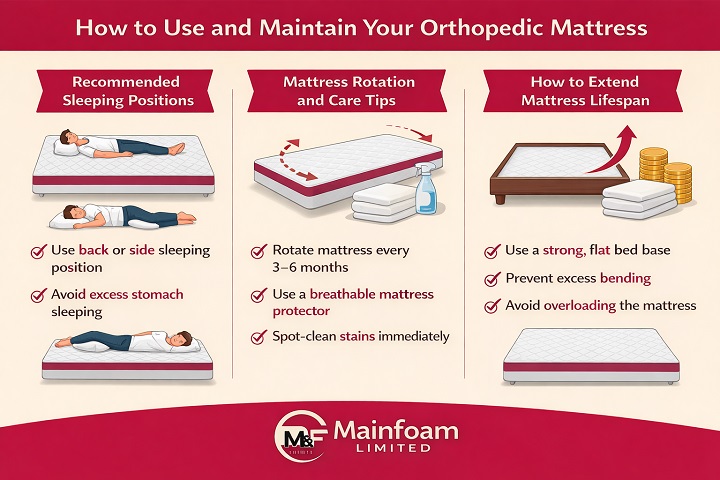
Rotate every 3–6 months
Use a mattress protector
Avoid folding or bending
Keep it dry and well-ventilated
Not mandatory, but pairing with an orthopedic or cervical pillow improves neck alignment and overall comfort.
Yes. It minimizes motion transfer, provides balanced support for different body weights, and reduces sleep disturbance.
Modern orthopedic mattresses are designed with breathable foam structures that allow airflow and reduce heat buildup.
Yes. Orthopedic mattresses work with:
Wooden bed frames
Metal frames
Platform beds
A flat, solid base is recommended for best performance.
Common recommended thicknesses are:
8–10 inches for average users
10–12 inches for enhanced support and durability
Thicker mattresses usually offer better weight distribution.
Yes. Orthopedic mattresses are designed to support higher body weight without excessive sinking, making them ideal for heavier sleepers.
Some users experience a short adjustment period of 3–14 days as the body adapts to proper alignment. This is normal and temporary.
High-quality orthopedic mattresses resist sagging due to their dense foam and reinforced core. Proper use and rotation extend lifespan.
A quality orthopedic mattress typically lasts beyond 7–10 years, depending on foam density, usage, and maintenance.
Yes, if well-designed. A good orthopedic mattress provides enough firmness for alignment while allowing slight contouring at the shoulders and hips for side sleepers.
Yes. Proper spinal alignment reduces stress on the lower back. An orthopedic mattress helps keep the spine neutral, reducing pain caused by poor sleeping posture.
An orthopedic mattress:
Has higher density foam or structured layers
Offers firmer, balanced support
Maintains spinal alignment
Reduces sagging over time
A regular mattress prioritizes softness, not corrective support read more
An orthopedic mattress is suitable for:
People with back pain or joint pain
Individuals with posture or spinal alignment issues
Elderly users needing firm body support
Anyone seeking long-term sleep comfort and durability
It is not limited to medical patients; it is ideal for everyday use.
Yes. Orthopedic mattresses promote healthy spine development and posture. They are safe and beneficial for growing children.
Absolutely. It provides joint support, reduces pressure points, and makes movement easier, improving sleep quality for elderly users.
Yes. Firmer support prevents excessive sinking of the midsection, which can strain the spine for stomach sleepers.
Yes. By keeping the spine properly aligned from head to waist, pressure on the neck and shoulders is reduced, especially when paired with a suitable pillow.
Orthopedic mattresses are firm but not hard. The firmness is engineered to support the body without causing discomfort. Quality orthopedic mattresses balance firmness with pressure relief.
No. While it is beneficial for people with back pain, many people choose orthopedic mattresses for preventive health, better sleep posture, and long-term comfort.
An orthopedic mattress is designed to support proper spinal alignment, reduce pressure points, and evenly distribute body weight. It is engineered to support the back, joints, hips, and shoulders, especially during long hours of sleep.
While not medical devices, orthopedic mattresses are designed using principles recommended by orthopedic specialists for spinal support and pressure relief.
You likely need one if you:
Wake up with back or joint pain
Toss and turn frequently
Feel tired after sleeping
Experience posture discomfort
No products in the basket.
WhatsApp us