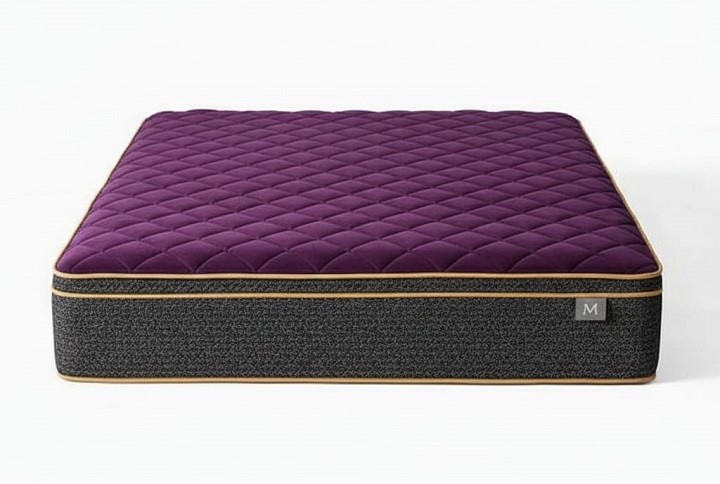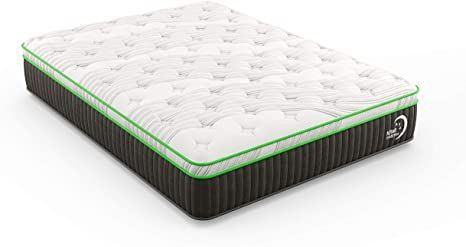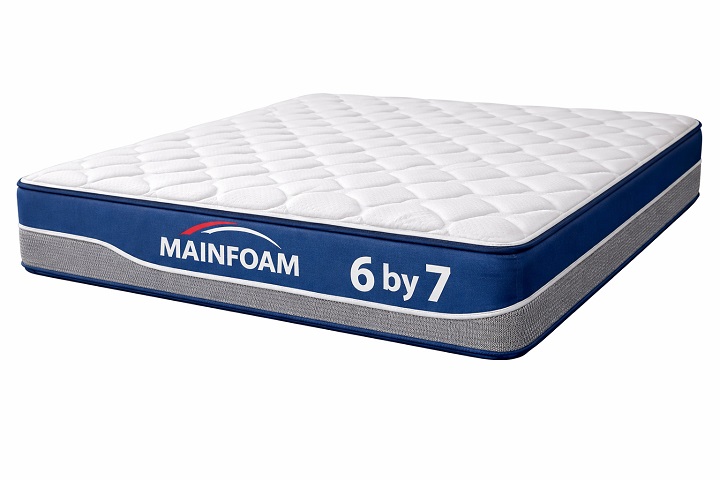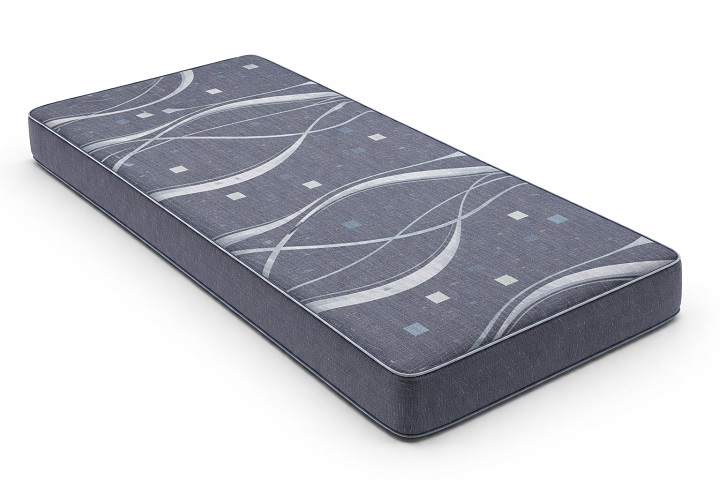
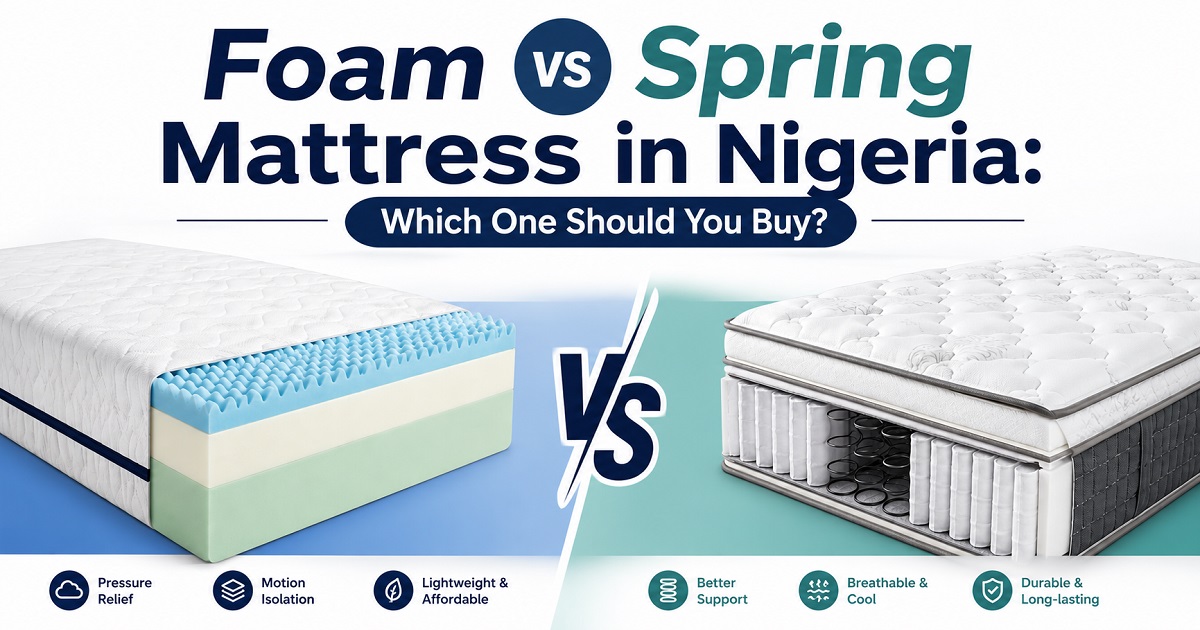
Choosing a new mattress in Nigeria should be straightforward. You walk into a store, pick what feels good, and go home to sleep well. In reality, most buyers stand between a foam mattress and a spring mattress with no clear idea which one actually suits their body, budget, or bedroom.
This guide breaks it down honestly — no fluff, no upselling. Just a clear comparison so you can decide with confidence.
What Is a Foam Mattress?
A foam mattress is built entirely from layers of foam — typically high-density polyurethane foam, memory foam, or a combination of both. The entire structure is foam from base to sleeping surface. There are no coils, no springs, and no internal framework.
Foam mattresses dominate the Nigerian market for good reason. They are widely available, come in a range of densities, and manufacturers like M&F Mainfoam have developed local foam technology specifically suited to Nigerian climates and body types.
The most advanced version of this category is the orthopedic foam mattress. Products like the M&F Galaxy Orthopedic Mattress use high-density foam rated at 80 kg/m³ — designed to support body weight up to 100 kg and beyond without sagging or deforming over time.
What Is a Spring Mattress?
A spring mattress — also called an innerspring mattress — uses a network of metal coils as its core support system. A comfort layer of foam, fibre, or fabric sits on top of the coil unit. The springs flex under pressure and push back, creating what many describe as a “bouncy” sleep surface.
Spring mattresses have historically been associated with hotel bedding and premium pricing. In Nigeria, they are available but less dominant than foam options, partly because of cost and partly because of how they perform in tropical heat.
Foam vs Spring Mattress: Head-to-Head Comparison
1. Comfort and Body Support
Foam mattresses contour to your body shape. High-density foam and orthopedic foam distribute weight evenly, reduce pressure on your hips, shoulders, and lower back, and keep your spine in neutral alignment through the night. This is why foam — especially orthopedic foam — is consistently recommended for people with back pain.
Spring mattresses offer more of a surface-level bounce. They respond to pressure differently; instead of conforming to your body, they push back against it. For some sleepers this feels supportive. For others, especially side sleepers or those with joint issues, the lack of contouring creates pressure points.
Winner for support: Foam, particularly orthopedic-grade foam.
2. Heat Retention in Nigeria’s Climate
This is where many buyers in Nigeria get caught off guard. Traditional memory foam traps body heat. In Lagos, Abuja, Kano, or Port Harcourt — where temperatures stay high year-round and NEPA supply is unpredictable — sleeping on a mattress that retains heat is genuinely uncomfortable.
Spring mattresses have an advantage here. The open coil structure allows air to circulate through the mattress, making them cooler to sleep on. If you sleep in a room without consistent air conditioning, a spring mattress may feel more comfortable in terms of temperature.
Modern high-density foam mattresses from reputable Nigerian manufacturers address this through foam formulation and surface fabric design. The M&F Galaxy Orthopedic Mattress, for instance, uses a breathable cover fabric that helps manage surface temperature.
Winner for heat: Spring mattresses, though modern foam options have narrowed the gap.
3. Durability
A well-made foam mattress outlasts most spring mattresses in the Nigerian market. The springs in cheaper innerspring mattresses compress unevenly over time, develop squeaking sounds, and can eventually break through the comfort layer. In humid climates, metal coils are also vulnerable to internal rust — something you would never know about until the mattress starts to sag or squeak.
High-density foam does not rust, does not squeak, and does not develop uneven compression if the foam density is correct from the start. A 40 kg/m³ foam mattress will sag in two years. An 80 kg/m³ orthopedic foam mattress will hold its shape for five to eight years under regular use.
Winner for durability: Quality foam.
4. Price in Nigeria
Both types span a wide price range depending on size, brand, and quality. As a general guide for a standard 6×6 (queen) size:
| Type | Price Range (₦) |
|---|---|
| Standard foam mattress | ₦80,000 – ₦200,000 |
| Orthopedic foam mattress | ₦150,000 – ₦450,000 |
| Basic spring mattress | ₦120,000 – ₦280,000 |
| Premium pocket spring mattress | ₦350,000 – ₦800,000+ |
Budget spring mattresses often cost more than entry-level foam for similar quality levels. For the same ₦200,000, a buyer gets better long-term value from a mid-range orthopedic foam mattress than a basic innerspring.
Browse the full Mainfoam mattress range to compare sizes and specifications across foam options.
5. Motion Transfer
If you share a bed, this matters. Foam absorbs movement — when your partner turns over or gets out of bed, you barely feel it. Spring mattresses transfer motion across the coil system, meaning movement on one side of the bed disturbs the other sleeper.
For couples, foam wins outright.
Winner for couples: Foam.
6. Maintenance
Foam mattresses require minimal maintenance. Rotate every three to six months, keep dry, and use a good mattress protector. There are no internal components to worry about.
Spring mattresses need more attention. Flipping and rotating is important to prevent uneven coil compression. Any persistent moisture can begin to affect the internal coil structure without visible signs. A quality waterproof mattress protector is even more important for spring mattresses than for foam.
Who Should Buy a Foam Mattress?
A foam mattress — especially an orthopedic variant — is the right choice if you:
- Sleep on your side or back and need pressure relief
- Have any history of back pain, joint pain, or poor sleep posture
- Share the bed and want minimal sleep disturbance from movement
- Want long-term durability without internal component wear
- Are buying for a child’s or teenager’s bedroom
The M&F Galaxy Orthopedic Mattress is a strong choice in this category — high-density foam at 80 kg/m³, rated for 100 kg+ users, with orthopedic support built into the foam structure itself.
Who Should Buy a Spring Mattress?
A spring mattress may be a better fit if you:
- Sleep in a hot room without consistent air conditioning and find foam uncomfortably warm
- Prefer a firmer, bouncier sleep surface
- Are buying for occasional use, such as a guest room
- Are comparing a premium pocket-spring model against a basic foam option at a similar price point
That said, if budget allows, a high-quality orthopedic foam mattress with a breathable cover performs well even in warm conditions — making it the better all-round investment for most Nigerian households.
The Verdict
For most Nigerians, a quality foam mattress — particularly orthopedic-grade — is the smarter long-term buy. It offers better body support, lasts longer, handles motion transfer better, and comes from local manufacturers who have built their products for this climate.
Spring mattresses remain a valid choice, particularly for sleepers who prioritise airflow and a bouncier feel. But at equivalent price points, foam tends to outperform on durability and support.
If you’re ready to choose, explore the Mainfoam mattress collection or visit any M&F Mainfoam showroom in Lagos to test options in person before buying.