Choosing the right mattress directly affects posture, comfort, and long-term physical health.
However, not every mattress labeled “orthopedic” delivers real medical-grade support.
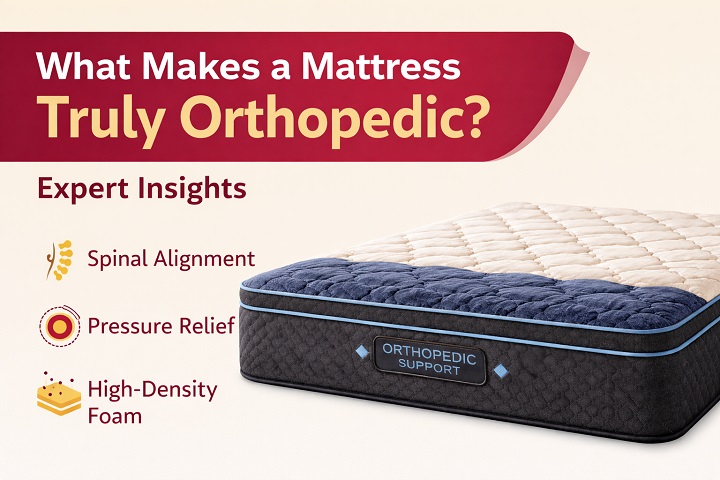
So, what truly defines an orthopedic mattress?
Let’s break it down clearly and practically.
Understanding the Meaning of an Orthopedic Mattress
An orthopedic mattress supports the body’s musculoskeletal system.
Specifically, it helps the spine, joints, muscles, and ligaments stay aligned.
Unlike standard beds, it focuses on health, not just softness.
Medical professionals originally developed orthopedic designs for recovery and pain management.
According to M&F Mainfoam, true orthopedic mattresses balance firmness with adaptive comfort.
Learn more here:
👉 https://mainfoam.com/orthopedic-mattress/
Designed for Proper Spinal Alignment
Spinal alignment remains the core purpose of any orthopedic mattress.
A well-aligned spine reduces nerve pressure and muscle strain.
Poor alignment causes chronic back pain and stiffness over time.
Therefore, mattress structure matters more than surface feel.
Research from Mayo Clinic confirms spinal neutrality improves sleep quality and pain reduction.
Firmness Level: Why It Matters for Body Support
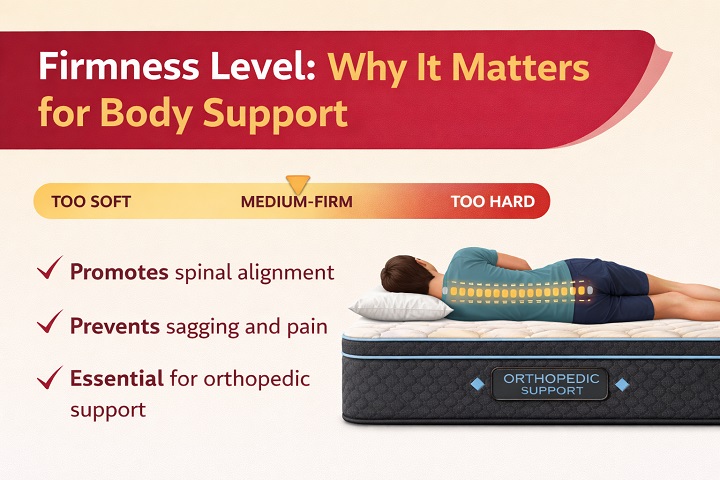
Firmness determines how evenly body weight distributes.
A mattress that sinks excessively bends the spine unnaturally.
Overly hard surfaces also create pressure stress.
Thus, balanced firmness remains essential for orthopedic benefits.
Medical sleep studies from Cleveland Clinic support medium-firm mattresses for spinal health.
Pressure Point Relief for Back, Hip, and Joint Pain
Pressure points develop around hips, shoulders, and lower back.
Orthopedic mattresses redistribute weight to reduce stress buildup.
As a result, circulation improves and pain decreases.
This feature benefits arthritis and sciatica sufferers especially.
High-resilience foam helps maintain comfort without sagging.
Role of High-Density Foam and Support Layers
Material quality defines orthopedic performance.
High-density foam resists compression and retains shape longer.
Support layers prevent body impressions and uneven sinking.
Consequently, durability and consistency improve significantly.
This is why M&F Mainfoam uses engineered orthopedic foam systems.
Motion Control and Stability for Undisturbed Sleep
Movement transfer disrupts deep sleep cycles.
Orthopedic mattresses absorb motion effectively.
Couples benefit from reduced partner disturbance.
Stable surfaces also aid people with mobility challenges.
Motion isolation contributes to restorative rest.
Recommended Mattress Thickness for Orthopedic Support
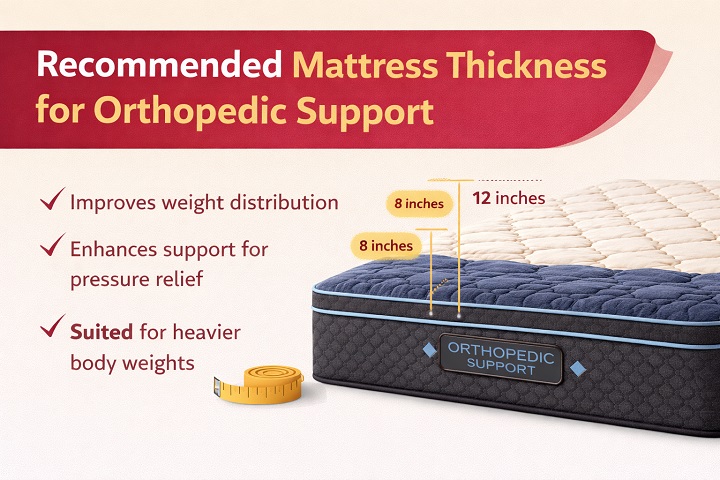
Thickness enhances weight distribution and support depth.
Thicker mattresses handle pressure more efficiently.
Most orthopedic models range from 8 to 12 inches.
Heavier sleepers benefit from increased depth.
More insights here:
👉 https://mainfoam.com/orthopedic-mattress/
Who Actually Needs an Orthopedic Mattress?
Orthopedic mattresses suit more people than expected.
Back pain sufferers benefit immediately.
Elderly users gain joint relief and stability.
Athletes recover faster with proper spinal support.
Even healthy sleepers prevent future posture problems.
Preventive sleep care matters.
Common Features of a True Orthopedic Mattress
Several traits define authentic orthopedic design.
These include reinforced cores and zoned support.
Breathable foam improves temperature regulation.
Edge stability prevents collapse when sitting.
Certifications and warranties also signal quality.
Marketing claims alone never guarantee performance.
Orthopedic Mattress vs Regular Mattress: Key Differences
Regular mattresses prioritize softness and initial comfort.
Orthopedic models focus on structural support.
Standard mattresses wear out faster.
Orthopedic options maintain shape longer.
Health outcomes differ significantly over time.
See the full comparison here:
👉 https://mainfoam.com/orthopedic-mattress/orthopedic-vs-standard-mattress-complete-comparison-guide/
How to Tell If a Mattress Is Genuinely Orthopedic
Check material density specifications first.
Ask about spine alignment testing.
Avoid mattresses without proper support layers.
Look for medical or orthopedic endorsements.
Trusted manufacturers provide transparent details.
High-quality orthopedic mattresses never rely on vague labels.
Mistakes to Avoid When Buying an Orthopedic Mattress
Avoid choosing softness over support.
Ignore “one-size-fits-all” orthopedic claims.
Never skip testing firmness suitability.
Do not overlook foam density ratings.
Price alone should not guide decisions.
Informed buyers experience better outcomes.
Long-Term Health Benefits of Using an Orthopedic Mattress
Consistent spinal alignment reduces chronic pain.
Joint stress decreases over time.
Sleep quality improves significantly.
Posture correction becomes natural.
Overall mobility benefits long term.
Sleep becomes a health investment, not just rest.
Where to Buy a Trusted Orthopedic Mattress
For proven orthopedic quality, choose M&F Mainfoam.
They specialize in medically-aligned mattress engineering.
Their products balance durability, comfort, and support.
Customer satisfaction remains consistently high.
Contact us directly here:
👉 https://mainfoam.com/contact-us/